
Seasonal Checklists
Winter Chicken Care Checklist
Practical winter care for backyard chickens: ventilation, frozen water, frostbite risk, and what not to do.
- Reviewed
- by Raising Chickens editorial team
- Sources
- 3 sources
- Level
- beginner
2 min read
At a glance
- Top risk
- Moisture
- Daily job
- Water
- Heat lamps
- Avoid
Humid coops increase frostbite and respiratory stress.
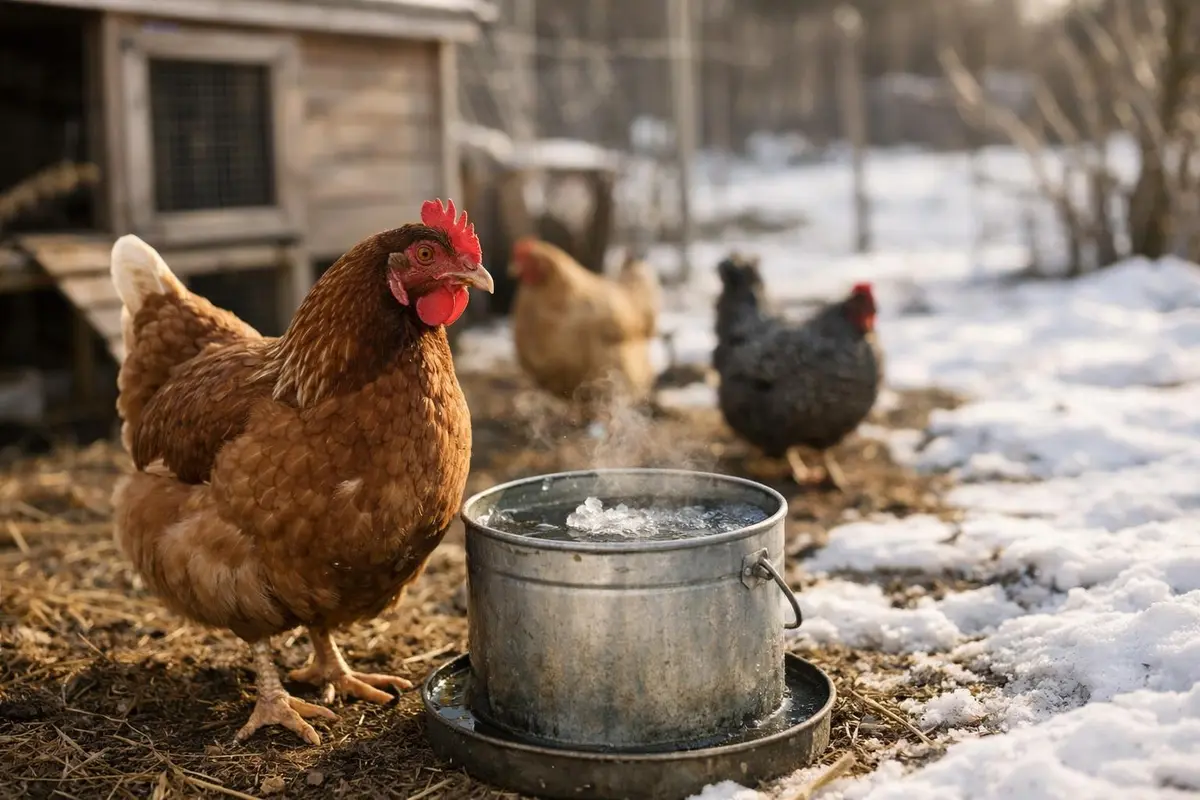
Liquid water matters more than extra heat.
They add serious coop fire risk.
Winter Risk Priorities
If you can only check a few things on a freezing morning, check these first.
| Item | Practical rule | Note |
|---|---|---|
| Frozen water | Fix immediately | Birds cannot maintain condition without regular water. |
| Wet bedding | Remove or top with dry material | Moisture is a frostbite driver. |
| Closed vents | Reopen high ventilation | Vent above bird height while blocking drafts at roost level. |
| Weak bird | Separate and assess | Cold magnifies hidden health or bullying problems. |
This Month’s Main Priorities #
- Keep water from freezing.
- Keep the coop ventilated above bird height. A coop sized close to the per-bird minimum is harder to ventilate without drafts, so revisit how much space do chickens need if crowding seems tied to moisture.
- Inspect combs and wattles for frostbite risk.
- Keep bedding deep and dry.
- Give birds a wind-protected run area so they are not trapped indoors all day.
Chicken Care Tasks #
- Check water at least twice daily in freezing weather.
- Watch comb and wattle tips for pale, gray, or darkened areas.
- Make sure smaller or lower-ranking hens are eating.
- Keep grit available if snow limits ground access.
- Use scratch sparingly in late afternoon if you already feed a complete ration.
Coop & Run Tasks #
- Keep high vents open and protected from wind-driven rain or snow.
- Top up bedding before it feels damp or compacted.
- Block prevailing wind on the run with a tarp, panel, or seasonal windbreak.
- Clear a small path or patch of run so birds can leave the coop.
- Check electrical cords and heated waterers for safe placement and damage.
Printable Winter Checklist
- OK Water checked morning and evening.
- OK High vents open; no condensation on ceiling.
- OK Bedding dry under roosts and near the waterer.
- OK Combs and wattles checked for frostbite risk.
- OK Run windbreak secure but not blocking all airflow.
- OK No bird visibly weak, isolated, or off feed.
What Not To Do #
- Do not seal up the coop.
- Do not use a heat lamp casually.
- Do not bathe a chicken in winter.
- Do not ignore frozen water because birds can eat snow.
- Do not assume cold-hardy breeds are fine in a wet, dirty coop.
What To Prepare Next #
As days lengthen, watch for resumed laying, plan a spring cleanout, and order spring supplies early if you plan to add chicks. Winter is also the right time to notice which parts of the coop stayed wet, drafty, or hard to access. For month-by-month task lists that adjust to your climate, use the monthly chicken care checklist. It covers the spring and summer jobs before they sneak up on you.
FAQ
Do chickens need a heater?
Most healthy adult chickens do not. Dry bedding, ventilation, wind protection, and liquid water are usually more important than supplemental heat.
How cold is too cold?
There is no single number for every flock. Breed, age, feathering, wind, moisture, and body condition all matter. Watch the birds and the coop conditions.
Should I close all the coop vents to keep them warm?
No. Keep high ventilation open so moisture can leave, while preventing drafts directly across the roost.
References
Sources used
3 visible sources
Cold-weather advice depends on breed, age, housing, and local conditions. These sources prioritize university extension poultry guidance.
- Caring for Chickens in Cold Weather
University of Minnesota Extension
Backyard-specific guidance on cold stress, water, feed, ventilation, and frostbite.
- Cold Weather Poultry Management
Poultry Extension
Poultry management reference for winter preparation and flock condition.
- Basic Poultry Nutrition
Poultry Extension
Supports water, feed, and nutrition fundamentals that matter more in winter.
Reviewed by Raising Chickens editorial team
Raising Chickens publishes practical, source-backed guidance for backyard chicken keepers and gardeners. See our editorial guidelines.
Last reviewed .
Related Guides
- Monthly Chicken Care Checklist
Generate a printable monthly checklist for your flock based on the month, your climate, and optionally your flock size.