Chicken + Garden
Plants Chickens Can Eat (and What to Avoid)
Common backyard plants chickens can eat, which ones to avoid, and how to offer greens without crowding out layer feed.
- Reviewed
- by Raising Chickens editorial team
- Sources
- 3 sources
- Level
- beginner
2 min read
At a glance
- Treat limit
- Under 10%
- Best choices
- Greens + herbs
- Avoid
- Unknown plants
Keep complete feed as the main diet.
Leafy greens and common herbs are useful starter plants.
Identify before feeding or composting in the run.
Chicken Garden Decision Table
Use the status as a starting point, then check plant ID, pesticide exposure, and which part of the plant you are offering.
| Item | Practical rule | Note |
|---|---|---|
| Good starter plants | Kale, lettuce, cucumber, squash, oregano, mint, parsley | Offer as treats or grow outside the run fence. |
| Use with caution | Spinach, chard, onion-family scraps, citrus | Small amounts only; avoid making them routine staples. |
| Avoid outright | Raw beans, rhubarb leaves, avocado pit/skin, oleander, foxglove, yew | Do not toss trimmings where birds can scratch. |
| Unknown plant | Treat as avoid until identified | Plant lookalikes make guessing risky. |
Safe Plants (Common Examples) #
If you are not sure about a specific plant by name, the chicken-safe plant checker gives a safe / caution / avoid / unknown verdict for common backyard species.
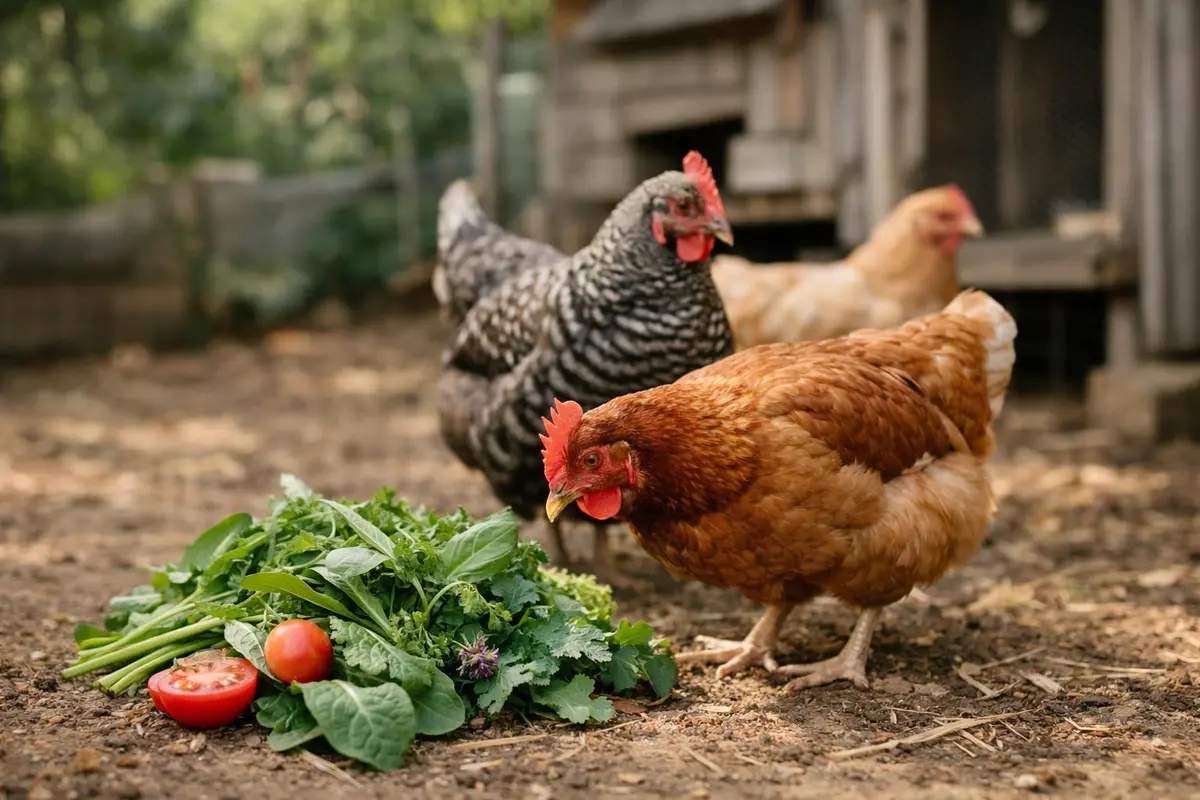
- Lettuce, kale, cabbage, bok choy, and small amounts of spinach or chard.
- Cucumbers, zucchini, squash flesh and seeds.
- Strawberries, blueberries, raspberries, watermelon, and melon rinds with a little flesh.
- Parsley, oregano, basil, mint, thyme, sage, and other common culinary herbs.
- Dandelion, chickweed, and plantain if unsprayed and correctly identified.
Use With Caution #
- Tomato fruit is fine when ripe; tomato leaves and unripe green fruit should stay out of the run.
- Onions, garlic, and leeks can be a problem in large amounts, so keep them occasional and small.
- Spinach and chard are high in oxalates; offer modest amounts.
- Citrus is not a favorite for many flocks and should not replace balanced feed.
Avoid Outright #
- Nightshade family leaves: tomato leaves, potato leaves, eggplant leaves.
- Raw or dried beans.
- Avocado pit and skin.
- Rhubarb leaves.
- Oleander, foxglove, yew, lily of the valley, hemlock, and many ornamentals.
- Moldy food of any kind.
How To Introduce Garden Plants Safely #
- Offer one new item at a time.
- Keep treats below about 10% of intake.
- Keep grit available for fibrous greens.
- Remove uneaten scraps before they mold.
- Keep layer feed available at all times.
Before Tossing Plants Into The Run
- OK Confirm the plant name and the plant part.
- OK Check that it was not sprayed with herbicide, pesticide, or fertilizer.
- OK Offer a small amount first and remove leftovers.
- OK Keep complete feed available so treats do not become the diet.
- OK Fence valuable seedlings; chickens scratch roots even when the plant is safe.
Common Mistakes #
The risky pattern is not usually one leaf of lettuce. It is tossing a whole garden cleanout into the run, feeding scraps instead of complete feed, or assuming every green plant is safe because the chickens seem interested. If treats keep creeping past the 10% mark, run your flock through the chicken feed calculator. Seeing the daily feed target makes it easier to keep greens in the treat lane.
FAQ
Can chickens eat tomatoes?
Ripe tomato fruit is fine in moderation. Tomato leaves and unripe green tomatoes should be avoided because they contain solanine-family compounds.
Are weeds safe?
Some common weeds such as dandelion and chickweed are useful, but only if you can identify them and know they were not sprayed.
Can safe plants still cause problems?
Yes. Too many watery or low-nutrition treats can dilute the layer ration, reduce egg quality, or cause loose droppings.
References
Sources used
3 visible sources
Poultry-specific plant data is limited, so this page uses poultry extension guidance plus broader animal-poison-control plant references where appropriate.
- Plants Toxic to Poultry
Poultry Extension
Poultry-specific toxic plant reference for backyard flock owners.
- Feeding Chickens for Egg Production in Small and Backyard Flocks
Poultry Extension
Explains why complete feed should not be diluted by too many treats.
- Toxic and Non-Toxic Plants
ASPCA Animal Poison Control
Broad plant toxicity database used as a cross-check, not as a chicken-only source.
Reviewed by Raising Chickens editorial team
Raising Chickens publishes practical, source-backed guidance for backyard chicken keepers and gardeners. See our editorial guidelines.
Last reviewed .
Related Guides
- Chicken-Safe Plant Checker
Look up common backyard plants to see if they are safe, caution, avoid, or unknown for chickens, with notes on risky plant parts.